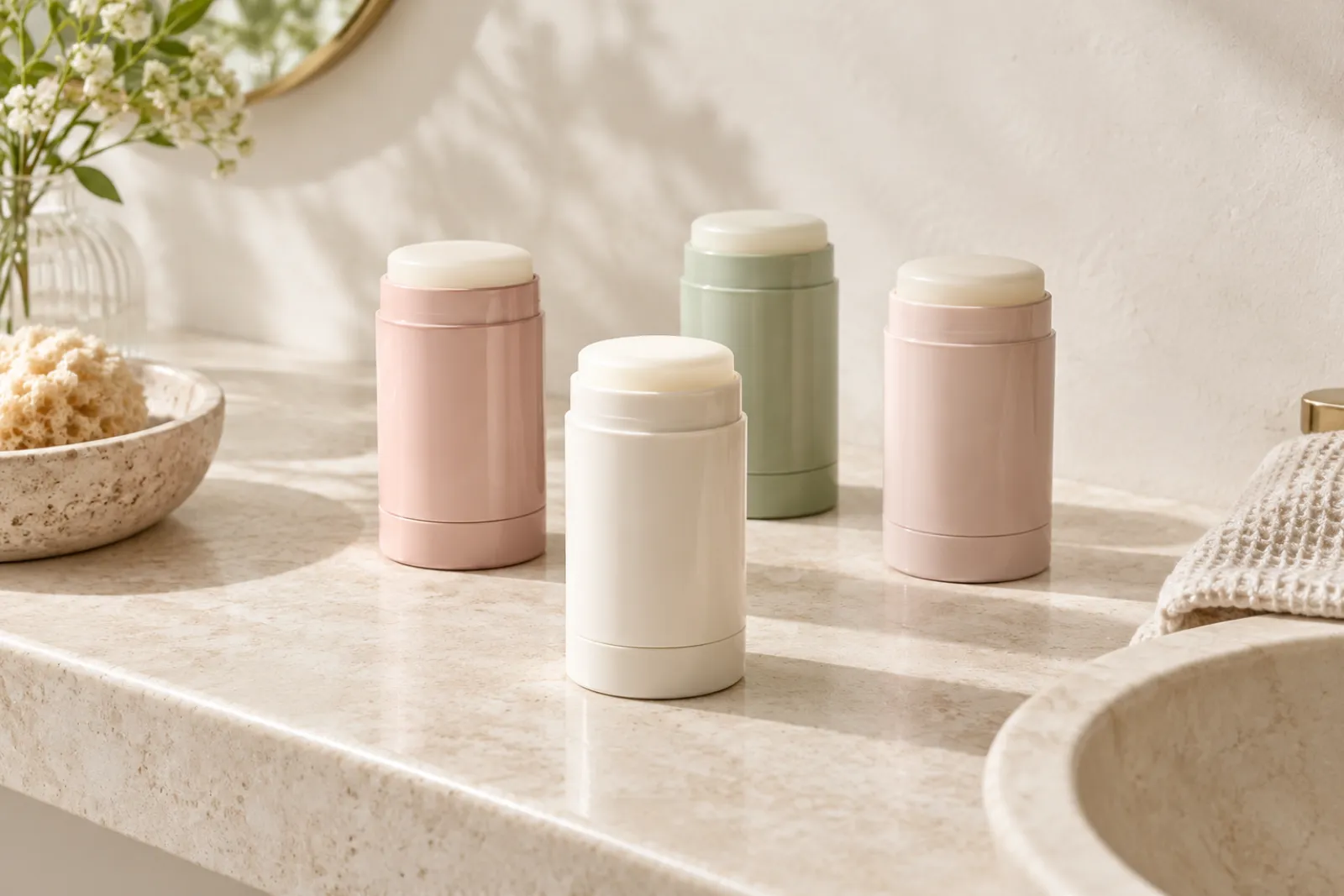
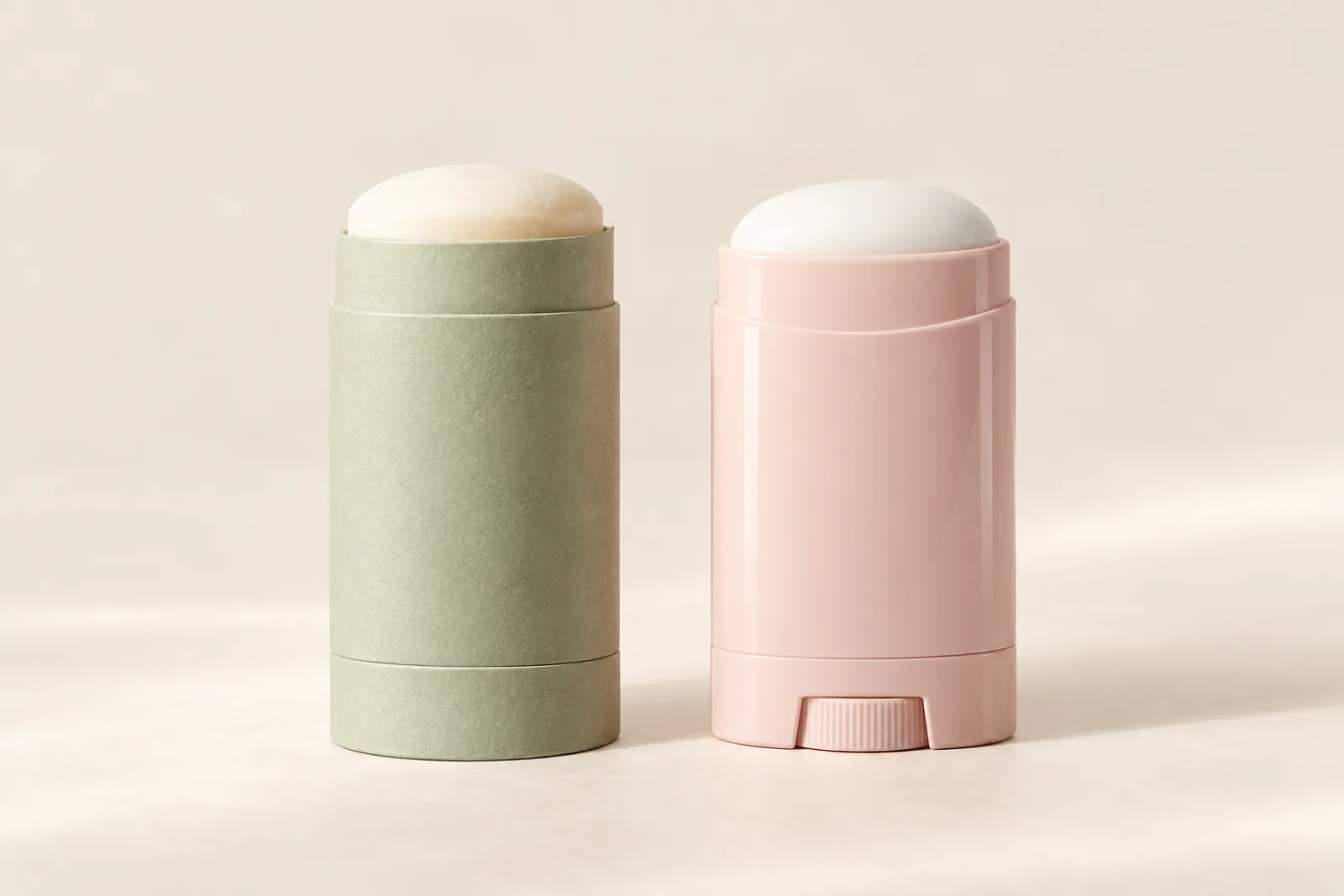
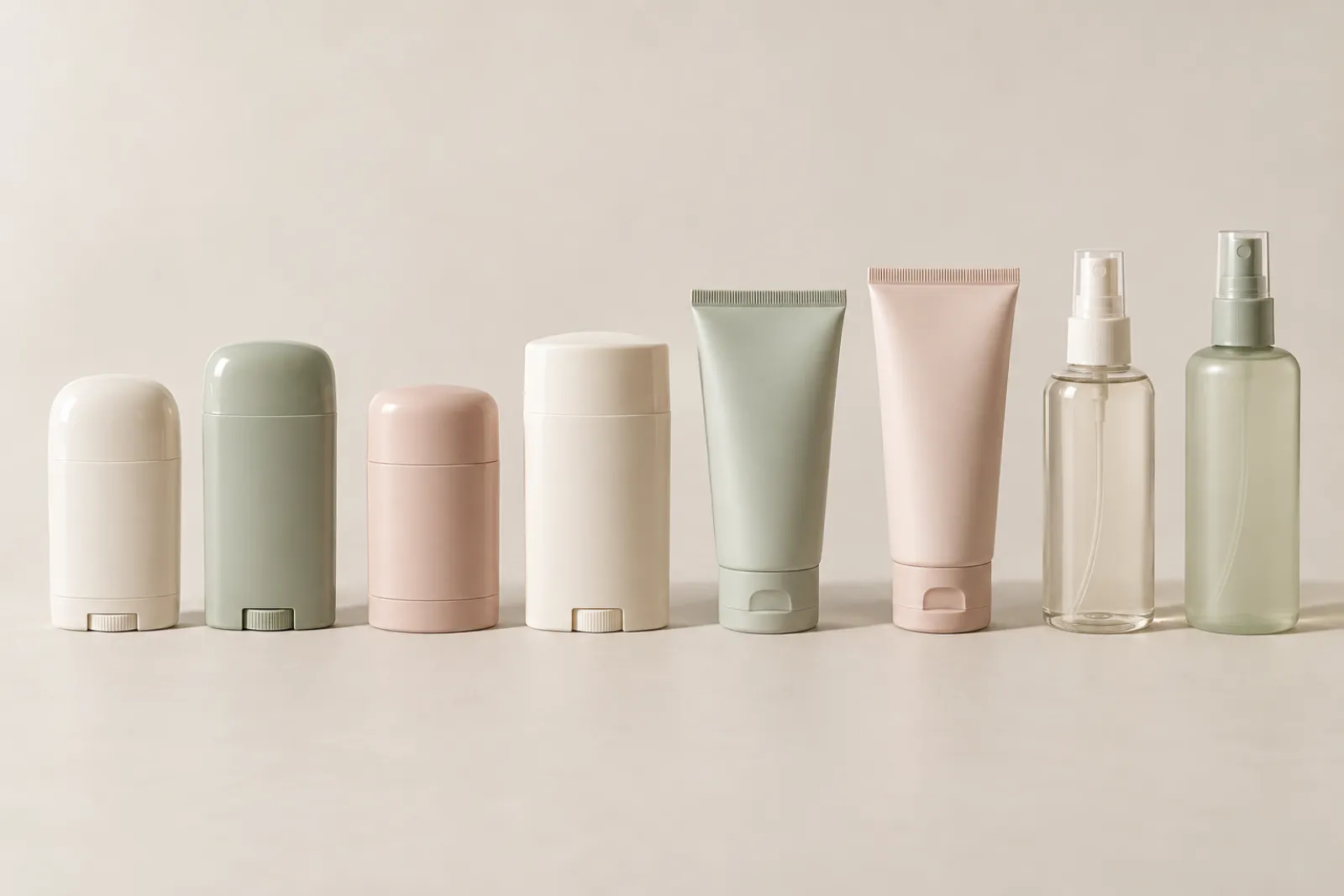
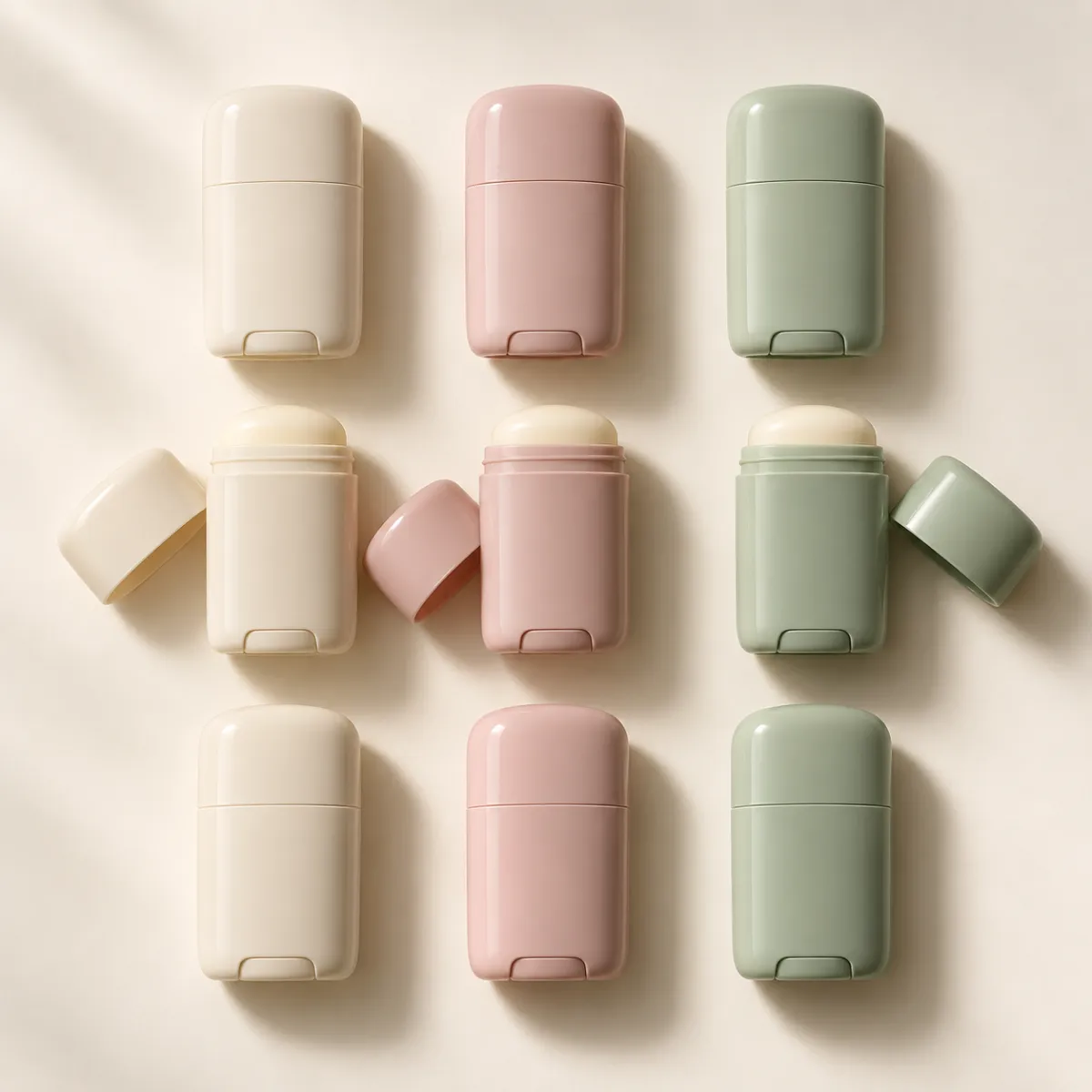
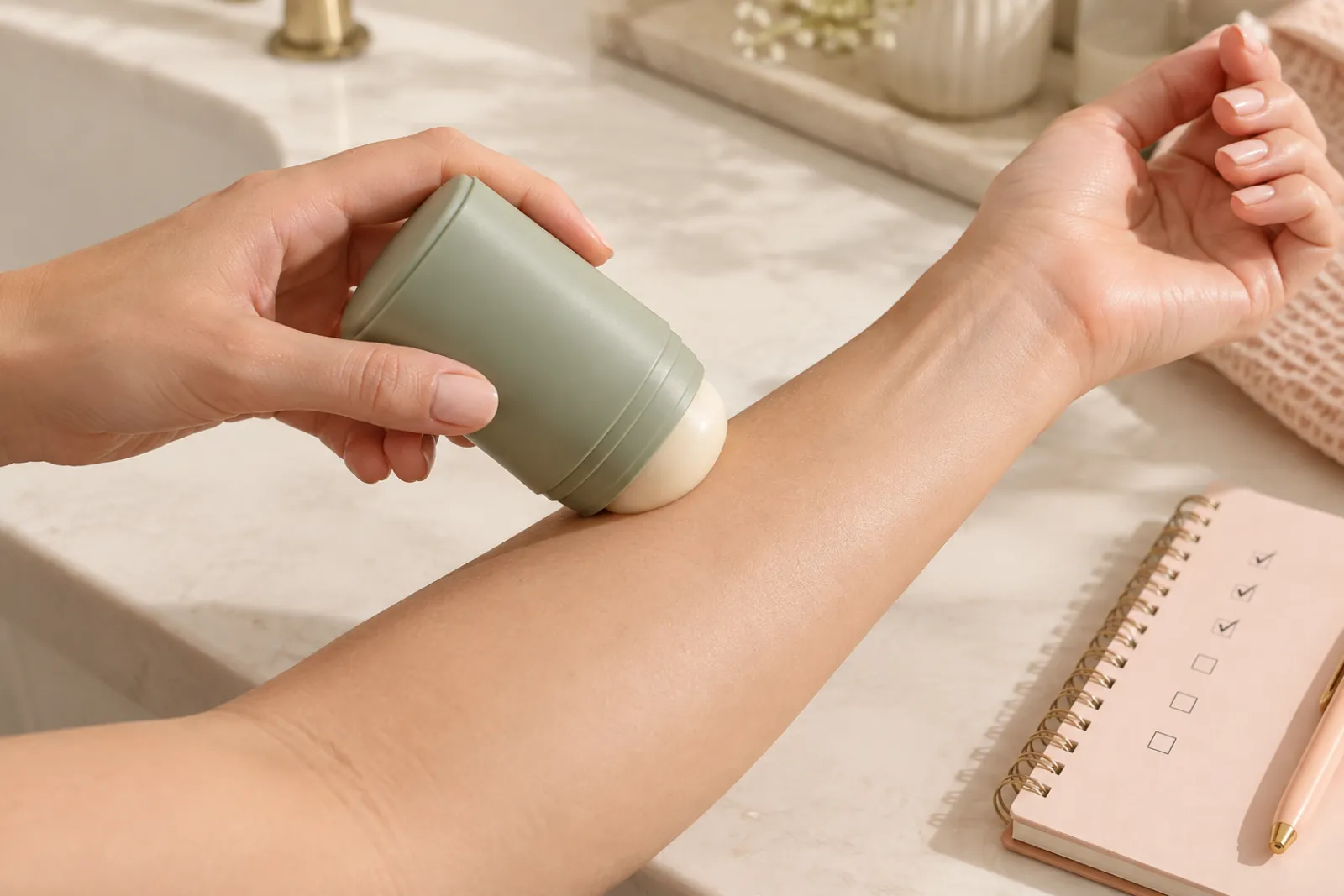
The two products sit side by side on the shelf, but they work in opposite ways. An antiperspirant uses aluminum salts to plug the sweat gland ducts temporarily, so less perspiration reaches the skin. A deodorant lets you sweat and goes after the smell instead.
That distinction matters because sweat itself barely smells. The B.O. comes from bacteria on your skin breaking down sweat, mostly from apocrine glands in the armpit. Take away the food or make the skin less friendly to those bacteria, and the stink never shows up.
Non-Toxic Deodorant Ingredients vs Aluminum-Based Antiperspirants
A natural formula swaps the aluminum plug for ingredients that absorb moisture (starches and clays) and natural odor fighters that change skin pH (sodium bicarbonate, magnesium, zinc, charcoal). Most also skip parabens, synthetic perfume and propylene glycol.
Is aluminum dangerous? Current research hasn't proven a link between aluminum sweat-blockers and serious disease, and we won't pretend otherwise. People switch for other reasons too: they don't want to block a normal body function, they prefer shorter labels, or the old stick left stains and irritation. All valid. The honest pitch is simple: these products control B.O., they don't stop sweat.
Why Smell and Odor Protection Differ Between Formulas
Because nothing blocks the wetness, results depend on what's fighting the bacteria. Bicarb is strong but harsh for some. Magnesium is gentler and a little slower. Charcoal and clays soak up moisture and help with odor control on long days. That's why one friend swears by a stick that fails you by lunch: your natural body chemistry decides a lot. Picking the right active ingredient for your skin is half the battle, and the table below makes that choice fast.